Regulations
Hotel check-in, Italy: documents guests need, who must be registered and how to handle difficult cases (2026)
In short
In Italy a hotel may accommodate only guests holding an identity card or another valid ID (art. 109 of the public security code, TULPS). Non-EU guests need a passport or an equivalent document with a photo. The hotel must send the details of every guest, children included, to the police (Questura) through the Alloggiati Web portal within 24 hours of arrival, or within 6 hours for stays of up to 24 hours. Details and documents can be collected online before arrival, but the hotel must check on arrival that each person matches their document.
 Hotel check-in ready before the guest arrives€9.99/unit a month until Dec 31
Which documents do guests need to check in at an Italian hotel?
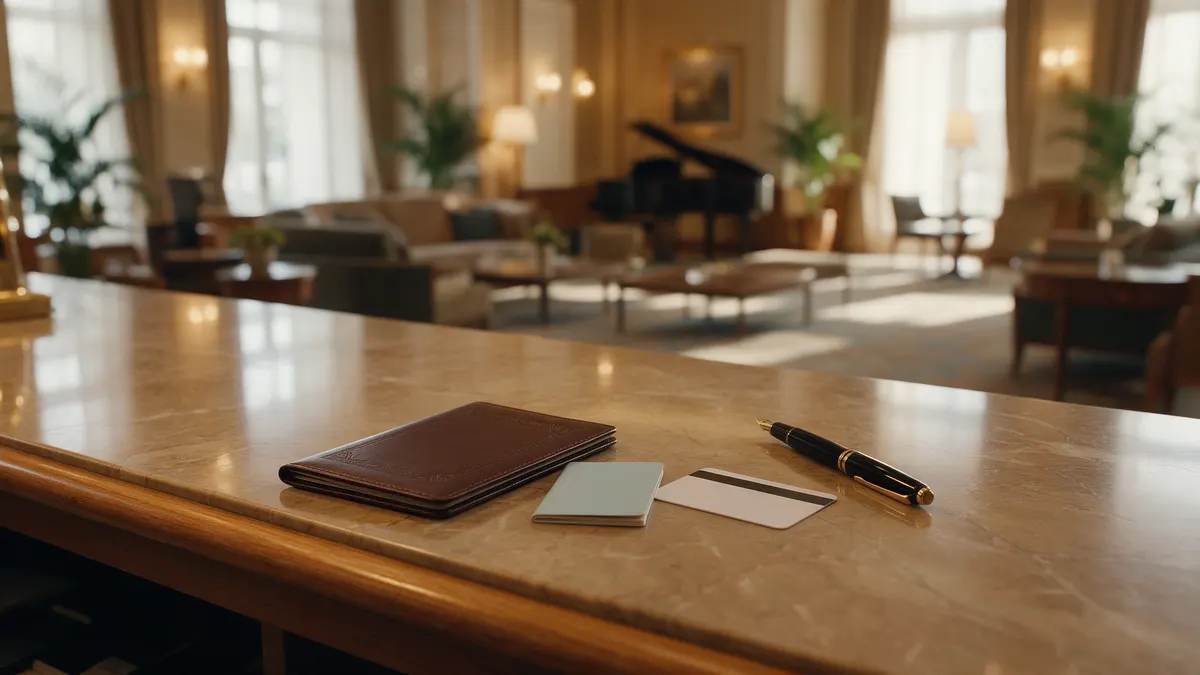
The rule is article 109 of TULPS (Royal Decree 773/1931): hotels and other accommodation may host only people holding an identity card or another document able to prove their identity under current rules. For non-EU citizens a passport, or a document treated as equivalent by international agreements, is enough, as long as it carries the holder’s photo.
| Guest | Document | Notes |
|---|---|---|
| Italian citizen | Identity card (including the electronic CIE) or an equivalent document | Under art. 35 of DPR 445/2000 equivalents include passport, driving licence, boat licence, pension book, heating-system licence, firearms licence and photo ID cards with a stamp issued by a state administration |
| Citizen of another EU country | National identity document or passport | Check that the document type is in the Alloggiati Web document table |
| Non-EU citizen | Passport or equivalent document with a photo | Art. 109(2) TULPS |
| Children | Everyone is registered, usually as family members of the head of family | The record asks for document details only for a single guest, head of family or group leader |
The Italian health card (tessera sanitaria) is not an equivalent document, because it has no photo. When in doubt about a foreign document, download the document-type table from the “Scarica tabelle” section of the Alloggiati Web portal.
Who must be registered with the police?
The hotel reports every person staying, not just the one who booked. On the portal each record is one of three types:
- single guest, with personal and document details;
- head of family with family members: the head of family with the document, the others, children included, with personal details only;
- group leader with group members: the same logic for friends, colleagues or tour groups.
The record asks for a document only from the single guest, head of family or group leader, but the law speaks of people “holding” a document: ask every adult for theirs and, if a minor has none, ask your Questura how to proceed. The portal steps are in our guide to Alloggiati Web guest registration.
What is the deadline, including for arrivals after midnight?
| Situation | Deadline | Source |
|---|---|---|
| Stay longer than 24 hours | Within 24 hours of arrival | Art. 109(3) TULPS |
| Stay of up to 24 hours | Within 6 hours of arrival | Art. 109 TULPS as amended by Decree-Law 53/2019 |
| Arrival date accepted by the portal | Today or yesterday only | Alloggiati Web portal manual |
| Receipts | Download within 30 days, keep for 5 years | Alloggiati Web portal |
| Failure to report | Arrest of up to 3 months or a fine of up to €206 | Art. 17 TULPS |
The clock starts at arrival, which is why late arrivals are the hardest. A hypothetical example: a guest arriving at 1:30 a.m. for one night must be reported by 7:30 a.m.; one arriving at 11:50 p.m. for three nights, by 11:50 p.m. the next day. Failing to report is a criminal offence, not just an administrative fine.
Difficult cases: expired, forgotten or photographed IDs
- Expired ID. TULPS asks for a document able to prove identity and has no specific rule on expired documents. The rule that lets people use an expired ID by declaring their details haven’t changed (art. 45(3) DPR 445/2000) concerns dealings with public offices, not hotels. The safe choice is to ask for another valid document, such as a passport or driving licence, and to call the Questura if there is none.
- Forgotten ID or a photo on a phone. A photo is not the document, and checking that a person matches their ID means seeing it. Without a valid document, art. 109 doesn’t allow you to give the room. State the rule in your booking conditions.
- Arrivals when the desk is closed. After Consiglio di Stato ruling no. 9101/2025, the Interior Ministry circular of 18 November 2024 is back in force: the operator must check in person that the guest matches the document, and sending documents online is not enough. The ruling’s summary mentions video devices at the entrance allowing a real-time check. Read our guide to self check-in rules in Italy and ask your Questura before planning unstaffed arrivals.
Can the hotel keep a copy of the passport?
TULPS requires the hotel to report guest details, not to keep copies of documents. Under the GDPR, data must be limited to what is necessary and kept only as long as needed (art. 5): if the hotel keeps a copy, it needs a reason, must say so in its privacy notice and must decide when to delete it. What the law does require you to keep are the Alloggiati Web receipts, for five years.
Is online check-in before arrival allowed?
Yes, for collecting details and documents: the guest enters them from a phone before travelling, so only the document-to-person check is left at the desk and the police records are ready to file. It doesn’t replace identification on arrival, which remains the operator’s duty after ruling no. 9101/2025.
- 01
After booking
The guest receives the online check-in link and enters arrival time, details and documents for everyone in the room.
- 02
Before arrival
The system checks the uploaded documents and flags missing or unreadable ones.
- 03
On arrival
Staff match each document to the person and confirm identification.
- 04
Within the deadline
The records go to Alloggiati Web with the data already prepared, and the receipt is stored.
How Maurice handles guest documents
After booking, each guest receives the online check-in link: from a phone or computer, with no app or account, they enter arrival time, details and documents for every occupant, in their own language. Maurice collects and checks the documents; on arrival staff match document and person and confirm identification from the dashboard. Records are filed automatically with Alloggiati Web, receipts stay at hand, and the same data goes to the ISTAT portals of the supported regions. For the wider picture, see AI for hotels.
Frequently asked questions
Can a guest check in to an Italian hotel without ID?
No. Article 109 of TULPS lets hotels accommodate only people holding an identity card or another valid document; non-EU guests need a passport or an equivalent document with a photo. If a guest has none, ask the Questura for instructions.
Does a foreign driving licence work for check-in?
The equivalence list in art. 35 of DPR 445/2000 covers Italian documents, including the driving licence. For foreign guests the safe options are the passport or, for EU citizens, the national identity document. Check that the type appears in the Alloggiati Web document table.
Do children have to be registered?
Yes, every guest is reported, children included, usually as family members of the head of family. Document details are required only for the single guest, head of family or group leader; the others need personal details only.
What is the deadline when a guest arrives after midnight?
The deadline runs from arrival: 24 hours, or 6 hours if the stay is 24 hours or less. A guest arriving at 1:30 a.m. for one night must be reported by 7:30 a.m. (hypothetical example). The portal only accepts today’s or yesterday’s date as the arrival date.
Can I keep a copy of guests’ passports?
The law requires you to report the details, not to keep copies. If you do keep one, the GDPR requires a reason, a mention in your privacy notice and a deletion date. Alloggiati Web receipts must be kept for five years.
This article is general information, not legal or tax advice. Rules change and local regulations vary: check with your accountant or a professional before acting.
Sources
- Normattiva — Royal Decree 773/1931 (TULPS), art. 109
- Normattiva — Royal Decree 773/1931 (TULPS), art. 17
- Normattiva — DPR 445/2000, art. 35 (identity documents)
- Polizia di Stato — Alloggiati Web FAQ
- Polizia di Stato — Alloggiati Web portal manuals
- Giustizia amministrativa — Consiglio di Stato, section III, ruling no. 9101/2025
- Garante per la protezione dei dati personali — Regulation (EU) 2016/679 (GDPR)
Matteo Anzidei · Founder of Maurice Assistant
Matteo Anzidei founded Maurice Assistant in Milan to take repetitive work off hosts and property managers: guest messages, check-in, documents, Alloggiati Web and payments. He writes practical guides on short-term rental rules and automation.